Global Enterprise Partner Portal
Frontend leadership and architecture for a large-scale enterprise platform
Context & Problem
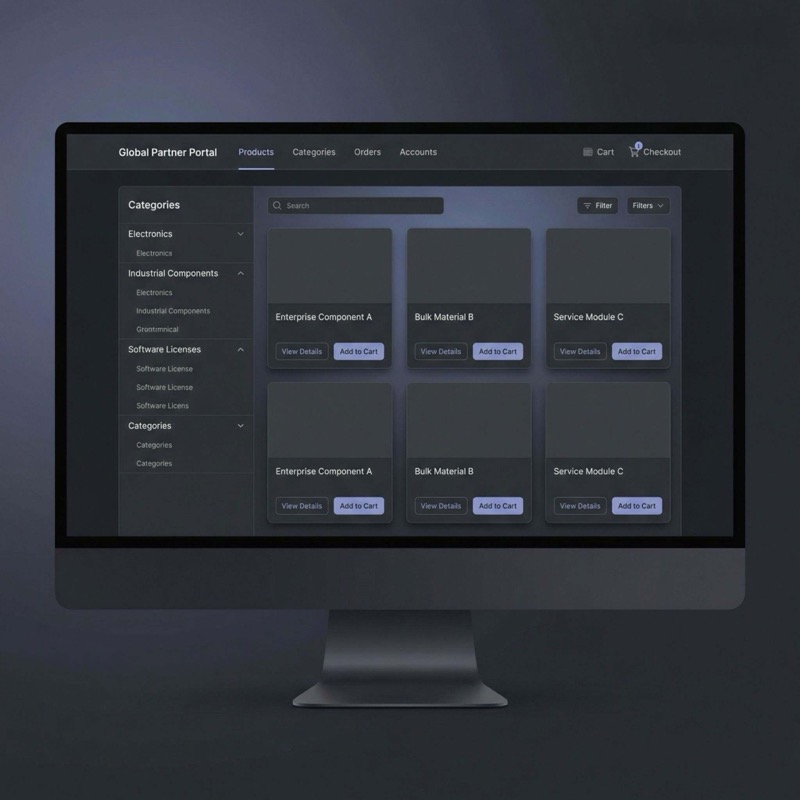
Siemens operates across multiple markets with diverse partner needs. The portal had to support different user roles, permissions, and workflows while remaining consistent, scalable, and maintainable over time. Existing legacy systems were fragmented, leading to inefficiencies and a poor user experience. IBM iX was responsible for the frontend implementation, while backend development, infrastructure, design, and other workstreams were handled by internal Siemens departments and additional contributing agencies. The challenge was to build a unified platform within this multi-party setup, aligning across teams with different processes, tooling, and priorities.
Constraints
- Strict corporate design guidelines with limited flexibility
- Large stakeholder group with varying priorities
- Need for high security and compliance with industry standards
- Long term maintainability and scalability
- Shared codebase across multiple teams with varying frontend maturity
- Strict review and release processes typical of large enterprises
My Role & Responsibility
- Owned frontend architecture and technical direction
- Led a team of 8 frontend developers
- Ensured code quality and consistency
- Coordinated closely with design, backend, and product teams
- Mentored junior developers across the team
- Reviewing and unblocking complex technical challenges
- Balancing feature delivery with long-term technical stability
Technical & Architectural Decisions
I inherited the technical direction from a previous colleague, building on decisions already in place while pushing new ones forward. I proposed a solution for API loading manager, designed technical diagrams for complex site survey features, and made the case to stakeholders for where micro-frontend architecture could be applied. Many architectural choices were already set when I joined — my focus was on evolving them pragmatically while introducing improvements where they had the most impact. An MVP-driven approach to analysing client features kept delivery on track even through tight budget restrictions, ensuring we shipped what mattered most without overengineering.
Collaboration & Leadership
Since frontend was our domain but design, backend, and infrastructure sat with other agencies and Siemens internally, clear communication was critical. Facilitated cross-team alignment through architecture decision records (ADRs) and regular tech syncs. Worked closely with external UX teams to ensure design feasibility and with Siemens backend teams to define API contracts. Introduced PR review culture and pair programming sessions that significantly improved code quality across the team.
Outcomes
The platform was successfully rolled out across 12 regions, consolidating 5 legacy tools into a single unified experience. Development velocity increased as teams could ship independently. The component library was adopted by 3 other internal projects, and the architecture became a reference implementation within IBM iX for enterprise portal projects.
Reflection
This project taught me that technical leadership in enterprise contexts is as much about communication and alignment as it is about code. The biggest wins came not from choosing the right framework, but from creating processes that enabled a diverse team to ship confidently and consistently.